
 Save
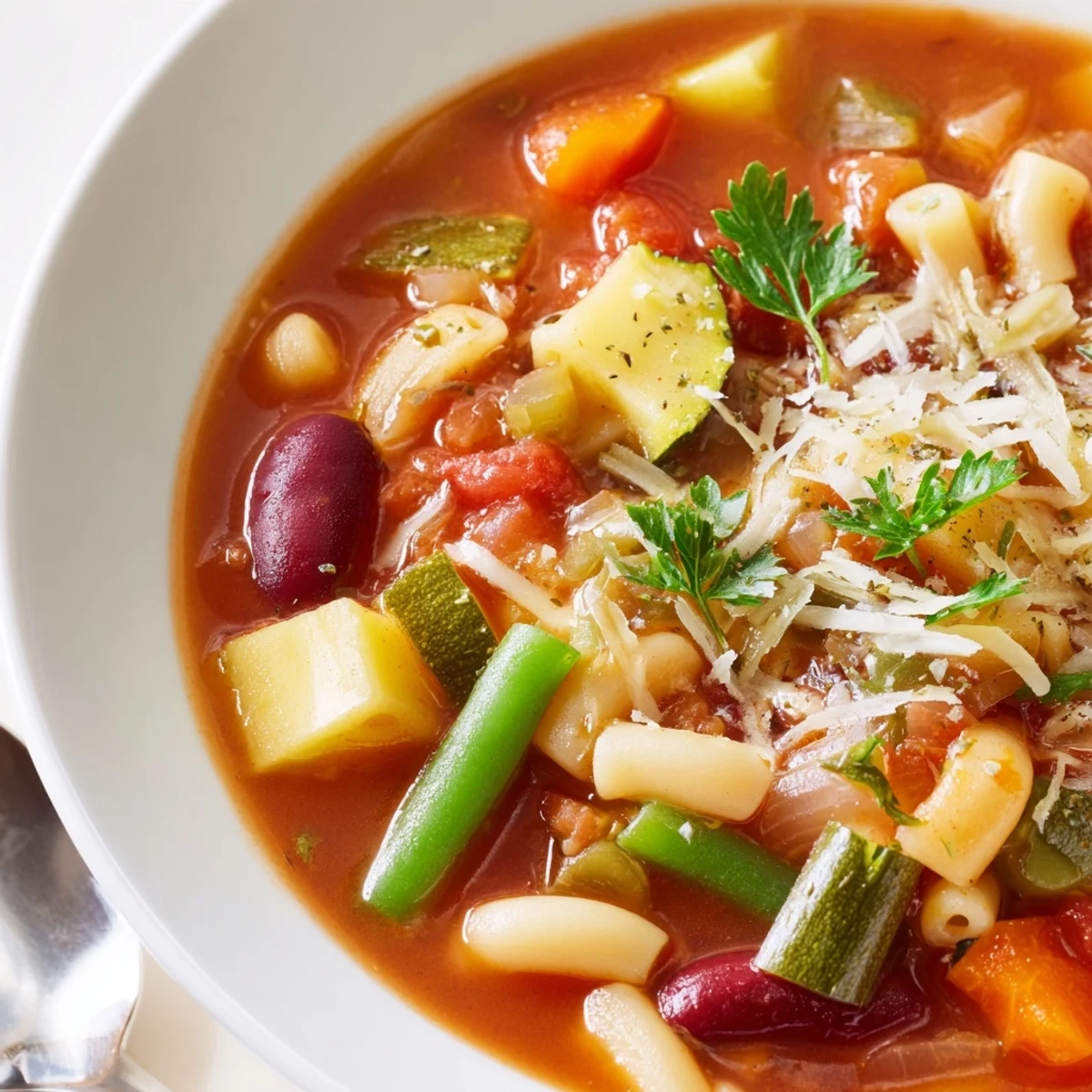
Save This Italian minestrone starts with a sauté of onion, carrot and celery, then adds garlic, zucchini and potato. Green beans, canned tomatoes and both cannellini and kidney beans simmer in vegetable broth, with dried herbs and a bay leaf. Small pasta is stirred in near the end and cooked until tender. Finish with chopped parsley and grated Parmesan for six warm, satisfying servings.
The rain was hammering against the kitchen window and I had a drawer full of mismatched vegetables staring back at me when I decided minestrone was the only reasonable answer to that particular Tuesday.
My neighbor Lucia once knocked on my door holding a bowl of her own minestrone and told me mine was missing potato, which changed absolutely everything about how I make it now.
Ingredients
- Olive oil: Use a generous pour because this is the foundation flavor that carries the whole soup from first sip to last.
- Onion, carrots, and celery: This classic soffritto trio is nonnegotiable and should be diced small so it melts into the broth rather than floating in chunks.
- Garlic: Two cloves is a starting point but nobody will judge if you add a third.
- Zucchini and potato: Lucia was right about the potato because it breaks down slightly and thickens the broth in a way nothing else can replicate.
- Green beans: Trim them well and chop into bite sized pieces so every spoonful feels balanced.
- Diced tomatoes: The entire can goes in juices and all because that liquid is pure concentrated flavor.
- Vegetable broth: A good quality boxed broth works perfectly but homemade will elevate this into something truly special.
- Cannellini and kidney beans: Rinse them thoroughly until the water runs clear to remove any canned taste that would cloud the broth.
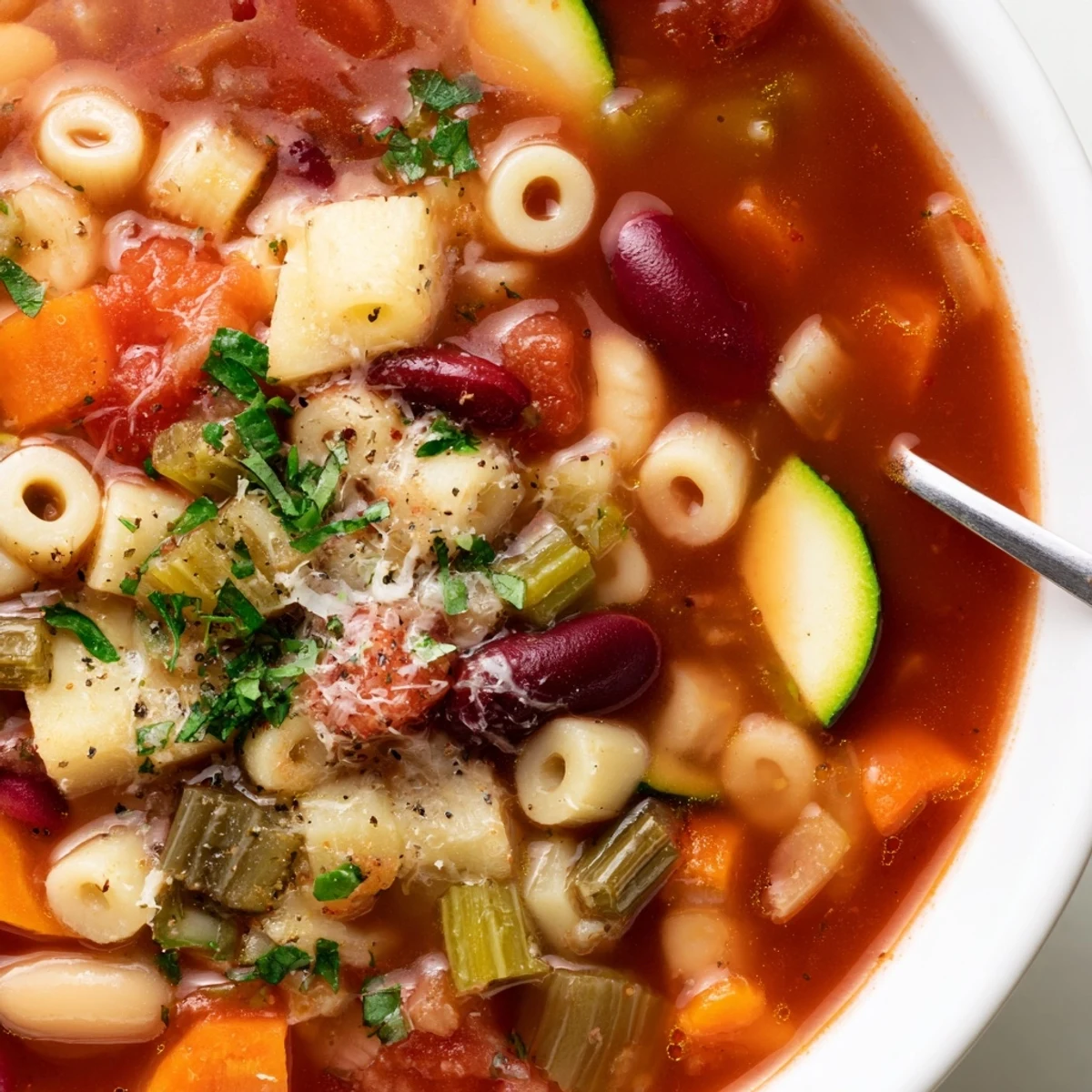
- Small pasta: Ditalini is traditional and ideal because it tucks into every spoonful without stealing the show.
- Dried oregano and basil: These humble dried herbs do heavy lifting here so do not skip or substitute them.
- Fresh parsley and Parmesan: Technically optional but the parsley brings freshness and the Parmesan adds a salty finish that ties every element together.
Instructions
- Build the base:
- Heat the olive oil in a large pot over medium heat and add the onion, carrots, and celery, stirring until everything softens and your kitchen smells like an Italian grandmother just walked in.
- Wake up the garlic:
- Add the garlic, zucchini, and potato, giving it a few minutes to bloom and coat every piece in that golden oil.
- Add the heartier elements:
- Stir in the green beans and the entire can of diced tomatoes with their juices, letting everything mingle.
- Build the broth:
- Pour in the vegetable broth and add both cans of beans along with the oregano, basil, bay leaf, salt, and pepper, then bring it all to a rolling boil before dropping the heat to a gentle simmer for fifteen minutes.
- Cook the pasta:
- Stir in the pasta directly into the soup and let it cook for about ten minutes until tender, which releases starch and subtly thickens everything.
- Finish and serve:
- Fish out the bay leaf, taste the broth and adjust the salt and pepper, then ladle into bowls and shower with parsley and Parmesan if you are so inclined.
 Save
Save I made a massive batch of this for a friend who had just come home from the hospital and she called me three days later asking for the recipe because she had been eating it for every single meal.
Making It Your Own
The beauty of minestrone is that no two pots ever need to be the same, so toss in spinach at the very end, swap the zucchini for butternut squash in autumn, or throw in a handful of shredded cabbage if that is what needs using up.
Storage and Leftovers
This soup keeps beautifully for up to four days in the refrigerator and genuinely tastes better on day two when all the flavors have had time to settle and deepen into something richer.
Serving Suggestions
A thick slice of crusty bread on the side turns this from a soup into a full meal that nobody will complain about.
- Drizzle each bowl with your best olive oil right before serving for an instant upgrade.
- A pinch of red pepper flakes on top adds warmth without overwhelming the gentle flavors.
- Always taste the broth one more time before serving because a final pinch of salt can transform the whole pot.
 Save
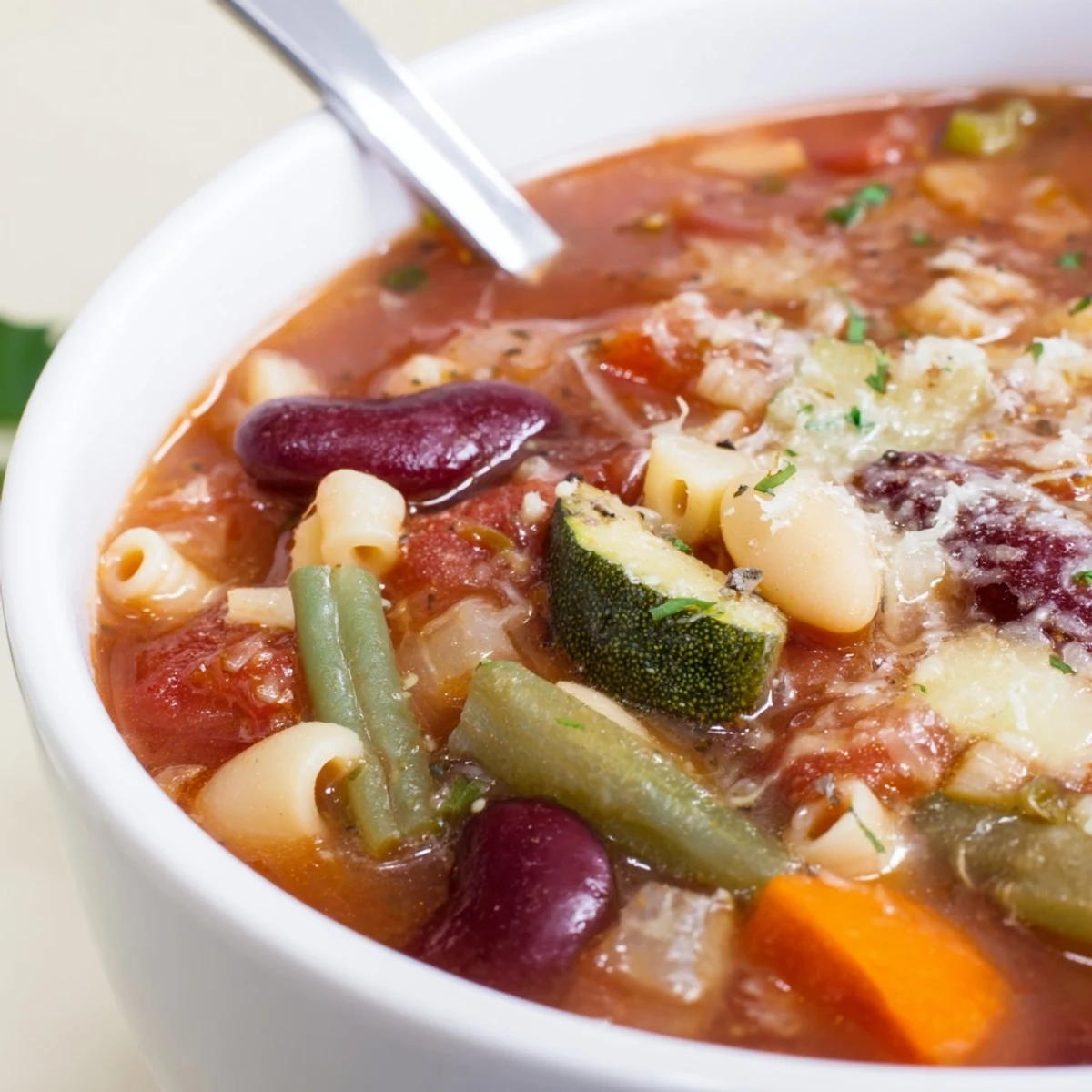
Save Some recipes earn their place in your rotation through convenience, but this one earns it through the way a steaming bowl of it makes any rainy evening feel like it has a purpose.
Recipe FAQs
- → Can I make this vegan?
-
Yes. Omit the grated Parmesan or swap in a plant-based alternative. Use a vegetable broth that’s free of animal ingredients to keep the bowl fully vegan.
- → What pasta works best?
-
Small shapes like ditalini, elbow macaroni or small shells are ideal; they nestle among the vegetables and beans without overpowering the broth.
- → How can I thicken the broth?
-
Simmer longer with the lid off to reduce liquid, mash a few beans into the soup, or briefly blend a cup and return it to the pot to add body without changing flavor.
- → Can I use fresh beans instead of canned?
-
Yes. If using fresh beans, blanch or simmer them until tender before adding to the soup; adjust cooking times so all vegetables finish evenly.
- → How should leftovers be stored?
-
Cool to room temperature, then refrigerate in an airtight container for up to 4 days. Reheat gently on the stove; add a splash of broth if it has thickened.
- → Is this suitable for freezing?
-
Yes. Freeze in portions without pasta for best texture. Thaw overnight and add fresh pasta when reheating, or use extra broth to refresh the soup.